 |
 |
 |
 |
 |
|
|
|
|
 |
 |
 Varyag |
 Minsk |
 Kiev |
 Nimitz Replica |
 Jiangnan Shipyard |
 |
|
 |
MAKE HOMEPAGE!
BOOKMARK THIS PAGE!
|
 |
|
Welcome to VaryagWorld - Dedicated to covering the past, present and future of the Varyag CV
|
 |
|
|
 |
 |
 |
|
|
 |
| STORY |
|
A Chinese company Chong Lot Travel Agency bought the Soviet-made Kuznetsov-class aircraft carrier VARYAG (Viking), lacking an engine and a rudder, from Ukraine for US$20 million in 1998, and wanted to tow it to Macau from the Black Sea and convert it into a floating casino.
Construction of the Varyag began in 1985. After the Soviet Union collapsed in 1991, ownership of the carrier was transfered to newly independent Ukraine. Ukraine halted construction in 1992, when the vessel was about 70% complete. The total estimated cost of the ship was about US$2.4 billion, and more than US$500 million was needed to complete her construction.
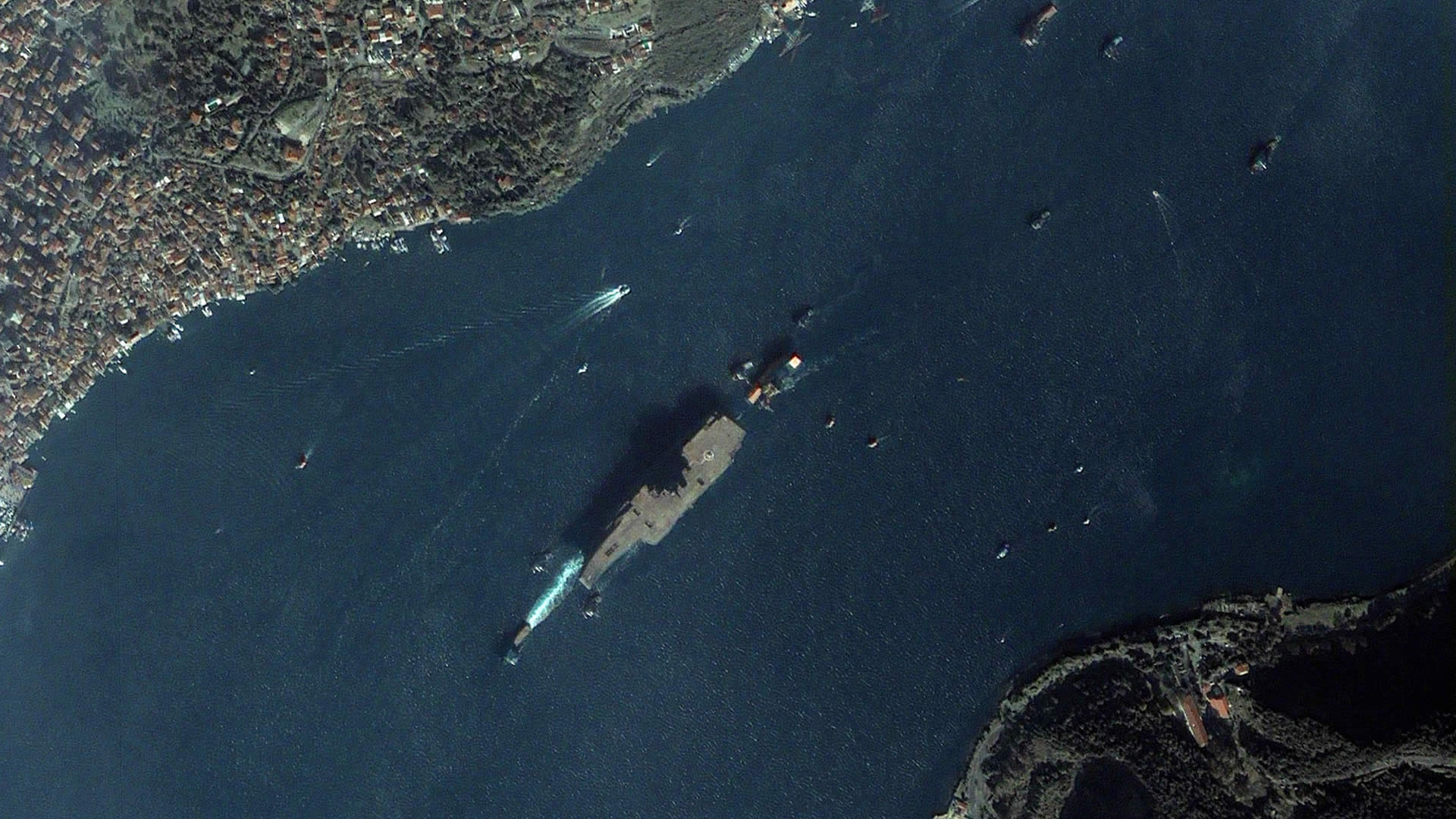
Varyag is now under very sophisticated upgrading at Chinese naval base Dalian where it had been tied up for three years after a towage lasted 627 days.
Nowadays, presence and mystery of the Varyag is a cost-effective way that cause maximum intimidation against unsinkable aircraft carrier Taiwan.
|
|
|
 |
| Mystery clears up... |
|
In November 1998, Cheng Zhen Shu, chairman of Chong Lot Travel Agency, has said that Varyag would become a multi-functional entertainment centre, with 600 room hotel, casino, discotheque, restaurants and night-clubs, and has called it Ocean Entertainment Centre.
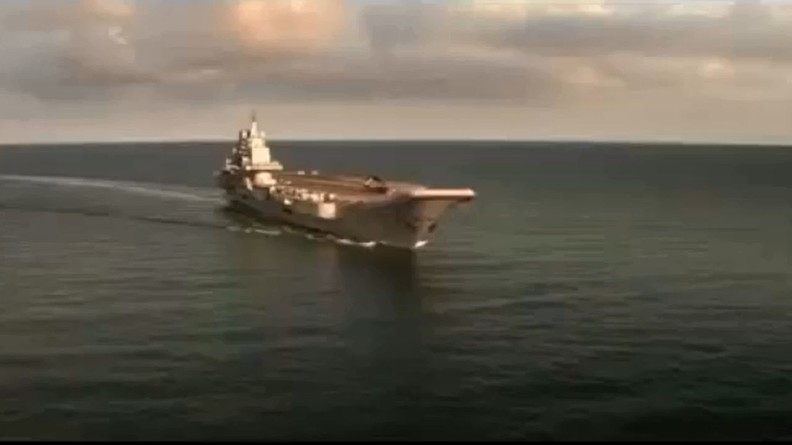
In May 2005, the Varyag was placed in dry dock and, in early August, it emerged painted in People's Liberation Army Navy gray.
|
|
At that time Macau's casino magnate Stanley Ho announced the construction of Oceanus, an $800 million entertainment complex in Macau, with 600 room hotel, casino, cinema, retail and apartments, scheduled to open in 2009.
It seems Stanley Ho lost the Varyag in transoceanic subterfuge and decided to have a new one.
|
 |
|
There are only four possibilities left for the future of the Varyag :
- First operational aircraft carrier.
- A training platform.
- A transitional platform.
- Floating theme park. (Varyag may appear in Beijing Olympic Games)
- Casino
|
|
|
|
 |
Military Power of the People’s Republic of China (US Defense Department’s annual report to Congress) |
Status of Aircraft Carrier Developments
There does not appear to be evidence that China has begun construction of an aircraft carrier. However, evidence in recent years increasingly suggests China’s leaders may be moving forward with an aircraft carrier program. For example, beginning in early 2006 and with the release of China’s Eleventh Five Year Plan, PRC-owned media reported on statements from high-level government and military officials on China’s intent to build aircraft carriers – including a March 2007 statement from the then-minister of China’s Commission on Science, Technology and Industry for National Defense (COSTIND).
Continued renovations to the former Soviet Kuznetsov-class aircraft carrier suggest China may choose to use the platform for training purposes. Moreover, Russian press has reported Chinese interest in acquiring Russian Su-33 carrier-borne fighters. In October 2006 a Russian press report suggested early-stage negotiations were underway for China to purchase up to 50 such aircraft at a cost of $2.5 billion. However, there has been no announcement of a contract for the aircraft.
Analysts in and out of government project that China could not have an operational, domestically-produced carrier before 2015. However, changes in China’s shipbuilding capability and degree of foreign assistance to the program could alter those projections.
Status of Aircraft Carrier Developments
In October 2006, Lieutenant General Wang Zhiyuan, vice chairman of the Science and Technology Commission of the PLA’s General Armament Department stated that the “Chinese army will study how to manufacture aircraft carriers so that we can develop our own.... Aircraft carriers are indispensable if we want to protect our interests in oceans.”
China first began to discuss developing an indigenous aircraft carrier in the late 1970s. In 1985, China purchased the Australian carrier the HMAS Melbourne. Although the hull was scrapped, Chinese technicians studied the ship and built a replica of its flight deck for pilot training. China purchased two former Soviet carriers – the Minsk in 1998 and the Kiev in 2000. Neither carrier was made operational; instead, they were used as floating military theme parks. Nevertheless, both provided design information to PLA Navy engineers.
In 1998 China purchased the ex-Varyag, a Kuznetsov-class Soviet carrier that was only 70 percent complete at the time of the Soviet Union’s collapse. Recent deck refurbishment, electrical work, fresh hull paint with PLA Navy markings, and expressed interest in Russia’s Su-33 fighter has re-kindled debate about a Chinese carrier fleet. The PLA’s ultimate intentions for the Varyag remain unclear, but a number of possibilities exist: turning it into an operational aircraft carrier, a training or transitional platform, or a floating theme park – its originally-stated purpose.
Regardless of Beijing’s final objective for the ex-Varyag, PLA Navy study of the ship’s structural design could eventually assist China in creating its own carrier program. Lieutenant General Wang stated that, “we cannot establish a real naval force of aircraft carriers within three or five years.” Some analysts in and out of government predict that China could have an operational carrier by the end of the 12th Five-Year Plan (2011-2015); others assess the earliest it could deploy an operational aircraft carrier is 2020 or beyond.
Status of Aircraft Carrier Developments
China first began to discuss developing an indigenous aircraft carrier in the late 1970s. In 1985, China purchased the Australian carrier the HMAS Melbourne. Although the hull was scrapped, Chinese technicians studied the ship and built a replica of its fl ight deck for pilot training. With the demise of the Soviet Union, China purchased two former Soviet carriers – the Minsk in 1998 and the Kiev in 2000. Neither carrier was made operational; instead they were used as fl oating military theme parks. Nevertheless, both provided design information to PLA Navy engineers.
Attracting the most attention is China’s 1998 purchase of the ex-Varyag, a Kuznetsov-class Soviet carrier only 70 percent complete at the time of the Soviet Union’s collapse. Recent deck refurbishment, electrical work, fresh hull paint with PLA Navy markings, and expressed interest in Russia’s Su-33 fighter have re-kindled debate on a Chinese carrier fl eet. Though the PLA’s ultimate intentions remain unclear, a number of possibilities exist for the Varyag:
- First operational aircraft carrier. Photos showing maintenance and repair on the hull and deck of the ship suggest this could be an option.
- A training platform. Given the difficulty and expense in overhauling the ex-Varyag, it is possible, but doubtful, the PLA would invest the resources to develop it only for training purposes.
- A transitional platform. The Varyag could act as a stand-in until an indigenous carrier can be completed, allowing the PLA Navy to use it as a model and gain experience.
- Theme park. The Varyag could be exploited for its design and then scrapped for parts, turned into a floating theme park, or used for its originally stated purchase purpose – a casino.
Regardless of Beijing’s final objective for the ex-Varyag, it is facilitating PLA Navy engineers’ comprehensive study of the platform’s structural design, which could eventually assist China in creating its own carrier program. Some analysts in and out government predict that China could have an operational carrier by the end of the 12th Five-Year Plan (2011-2015), but others assess the earliest China could deploy an operational aircraft carrier is 2020 or beyond.
|
|
|
|
|
 |
|
|
 |
|